
BLOG

Ola’s Story: For Sama is our eyes, our memory & the history of our revolution
So many of our colleagues and friends, who were such a big part of our lives, were also a big part of For Sama. We want to share some familiar faces from the film with you: where they are now, their memories of Aleppo and what they hope For Sama can share to the world about Syria.
Here’s Ola’s story...
I am Ola and I am 26 years old. I live in Gaziantep, Turkey and I’ve recently enrolled in university to resume my studies,
Back in Aleppo I was a volunteer in “Al-Ahmar” team. We used to always be together like a family. When we were under siege and one of us would find some kind of fruit or vegetable, we’d share it between us. For me, having this family was a big blessing.
Despite the difficult life, there were a lot of beautiful moments. The one that I remember the most is when the siege ended - we decorated our cars with balloons and wandered in east-Aleppo’s alleys, it was such a moment of incredible joy.
I remember when we left Aleppo we were kept at the crossing point for more than 24 hours in the cold. It was snowing, so we all stayed in a house that was mostly ruins, but in the moment of fear and heartbreak, that home and being with my friends made me feel safe and warm. The thing that I’ve ever been most afraid of, is losing one of them.
The film for me is our eyes, our memory, and the history of our revolution from the first day. The film is the only thing that keeps me going after all this loss and frustration I went through, which sometimes weakens me and causes me sorrow for what was lost.
I’m really touched when I hear that people who have never heard of our revolution are showing solidarity in this overwhelming way.
I wish for all of the people who watched the film to try with any means possible to prevent forced displacement from happening again anywhere in Syria, and I also want them to know that there are a lot of people now living under bombardment and shelling just like we were, and there’s a good chance they’ll be displaced like we were.

Nabil’s Story: I hope everyone who sees For Sama will help us tell the whole story
So many of our colleagues and friends, who were such a big part of our lives, were also a big part of For Sama. We want to share some familiar faces from the film with you: where they are now, their memories of Aleppo and what they hope For Sama can share to the world about Syria.
Here’s Nabil’s story...
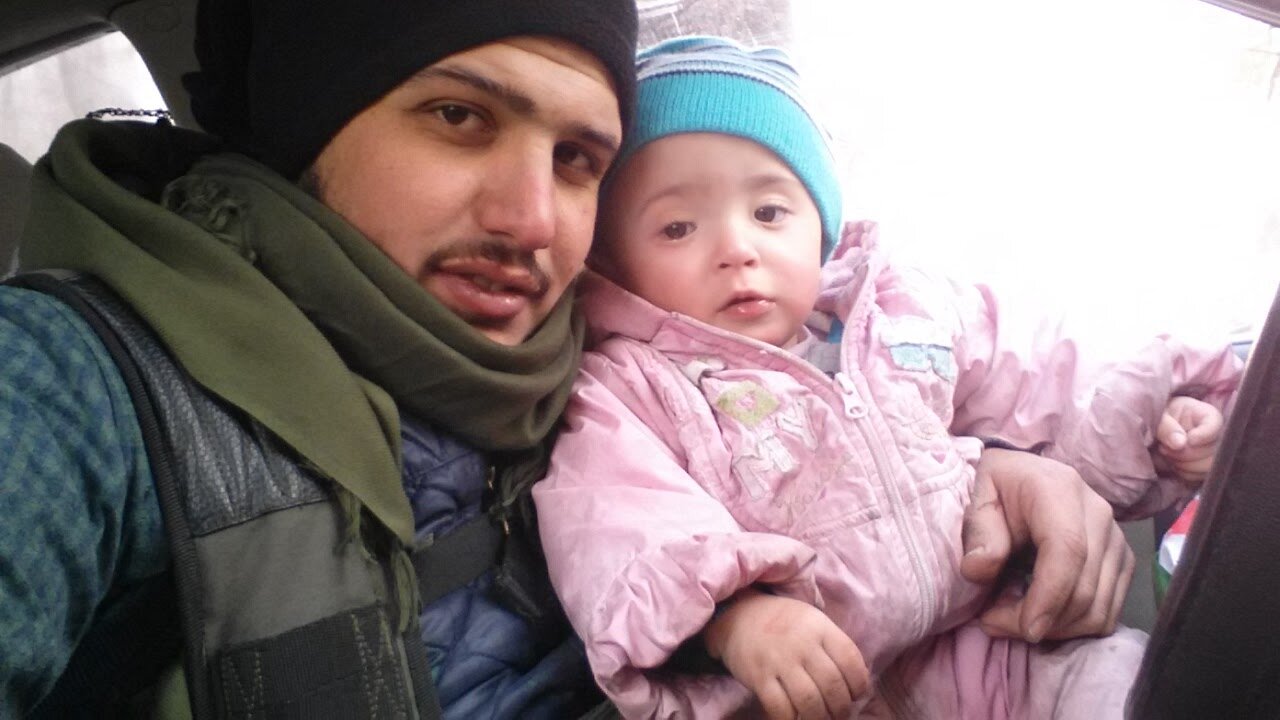
I am Nabil Al-Sheikh Omar and I now live in Aleppo’s northern country-side in Syria. I’m currently volunteering as a medical case officer with Molham’s team in Aleppo’s northern countryside. I also work as a nurse with the Independent Doctors Association.
In East Aleppo, I was a nurse in Al-Quds hospital. This was my home and the staff were my little family.
I remember I was sleeping in a building adjacent to the hospital when it got hit on 27 April 2016. I was woken by the sound of the explosion and I went down to see cars burning in front of the hospital and injured bodies all over the place. I tried to find a way to enter the hospital through some crack in the ruined building. On top of that there was no sound coming from inside the hospital. All of that left me completely devastated.
On the very first day of the last attack on Aleppo, an airstrike hit and fifteen minutes later the injuries started to reach the hospital. I asked the first person I saw, “Where did the bomb land?”, only to realise that it was so far from us, it could mean that we were the last hospital standing. This day started with only 10 injured people but ended with a number of around 400, and left a river of blood in the hospital. We were expecting to be hit at any moment because all of the other hospitals were bombed out of service in less than 24 hours. A couple of days later, we were on a balcony where we used to hear the sirens of ambulances. Instead of that, we heard a warplane heading towards us, we heard the whistle of the bomb. Moments later, someone came in and said an exploding barrel had landed nearby and the people who were fortifying the hospital got hit and died. At the very same moment, we heard another barrel landing, we were completely terrified, expecting a barrel to hit us at any moment.
One day, we received word that our hospital was going to be destroyed by warplanes. In seconds, we decided to evacuate the wounded, so I left the hospital with about 60 injured to a nearby building. That building had no capacity to host the injured, the building was cold and had no heating tools of any kind, but in under an hour we made it as much of a shelter as possible.
In Aleppo there were hard moments and also a lot of beautiful ones. The freedom bus and the agriculture project were very beautiful, especially because I was working nights as a nurse and during the day as a farmer.
There are some moments that I’ll never forget. We were all afraid and discussed who’s going to leave first. Hamza was looking at me because I was the youngest, so I spoke first and said I’m a nurse I won’t leave - I can help if something happens. Then my brother said he won’t leave me behind, so we all agreed that we wouldn’t leave until all of the wounded had left. Then we would leave together. We stayed together in Hamza and Waad’s room until the end.
One of my friends who was with me in Aleppo, but who I didn’t meet until after we left, saw the film and told me, “I lived all of these events but Waad managed to recap all of these memories in two hours”.
What we lived through is always repeated in Idlib and Aleppo's suburbs, and every time something like this happens we remember what we lived through and stand helpless as we can’t do anything. I hope that everyone who watches the film and sees the whole picture, will amplify the people’s voice and spread the news about how the people of Idlib are in danger of the regime, and at the same time of Hay’at Tahrir Al-Sham (HTS). I hope that everyone does whatever they can so these families can live safely. And I hope that everyone who sees the film will help us tell the whole story.
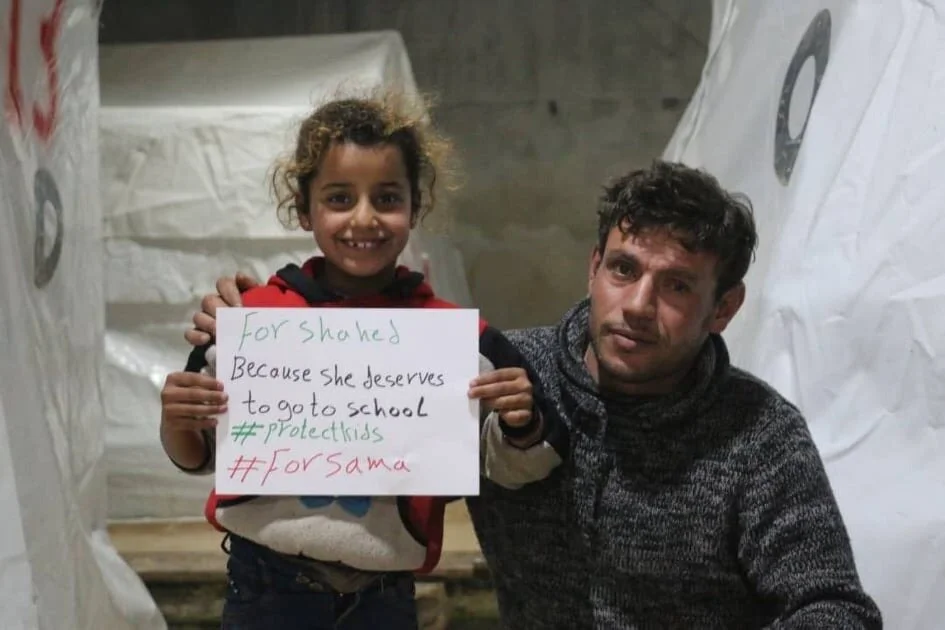
#PROTECTKIDS - JOIN OUR SOLIDARITY ACTION ON SOCIAL
The types of horrific attacks documented in For Sama continue in Idlib today.
The situation in Idlib, home to nearly four million civilians, is an emergency: in January there was a staggering 6,600 attacks on civilians that killed 208 people. Since the 1st December 2019, some 520,000 people have been displaced from their homes. 80 percent of them are women and children.
While politicians refuse to act, ordinary people inside and outside Syria are finding ways to stand in solidarity with one another. When a bomb drops on a hospital full of children it should not matter if it is in London or Idlib. People around the world are sharing the names of the children in their lives to remind the world, join them today.
So please share the name of the child in your life and the message that all children deserve protection.


SIGN TEXT: For __(insert name of child/children OR ‘For all children’)___, #ForSama #Protectkids
If your friends want to know what this all means please include links where they can watch the film as well:
(US): https://www.pbs.org/wgbh/frontline/film/for-sama/
(UK): https://www.channel4.com/programmes/for-sama/on-demand/66428-001
HOW TO GET INVOLVED: FOR IDLIB


احموا الأطفال
إدلب
بدنا نستخدم الضو والشهرة يلي عم تصير على فلم For Sama لنورجي للعالم أنو المشاهد يلي موجودة بالفلم عم تتكرر هلأ بسوريا مرة تانية, وأنو الفلم ولو كان تسمّى لسما, هوة انعمل لكل السوريين ولملايين الأطفال يلي تحت الخطر هلأ خاصةً بإدلب
بدايةً من يوم الجمعة القادم 31/1 بدنا ننشر عالسوشال ميديا ونعبيها صور من جوا سوريا لناس واقفين جنب أطفالهن أو أطفال بيقربولهن ابن اخت, ابن اخ, وهكذا
الفكرة هية كالتالي :
صورة لشخص, مع لافتة مكتوب عليها For وبعدها اسم الطفل يلي متصورين معو, وبعدها جملة وحدة قصيرة عن يلي بدكن ياه للطفل أمثلة:
For Khaled, because he deserves to go to school #ForSama #Protectkids
(لأنو من حقو يروح عالمدرسة)
For Fatima, because she should go to bed safely #ForSama #Protectkids
(لأنو من حقها تنام بأمان)
For Backari, because he should be able to play outside #ForSama #Protectkids
(لأنو من حقو يلعب برا البيت )
برا سوريا
أشخاص مشاهير + أشخاص داعمين لسوريا + أشخاص مؤثرين بالمجتمع
الفكرة:
بدنا منهم يحملو شي مهم بحياة الطفل: لعبة, بوط, رسمة, صورة, ويشاركو مع النص:
For __(insert name of child)___, for Sama, for all our children #Protectkids #ForSama
ملاحظات:
أهم شي نعرف أنو ما نتصور مع طفل بطريقة تسيئ لكرامتو بأي شكل
المطلوب المشاركة من جوا سوريا وبرا اكيد, ويلي بيلائي موضوع اللافتة مكلف من ناحية الوقت أو صعب لأي سبب بيقدر يكتب الجملة يلي ذكرناها بالبوست نفسو وتكون الصورة بس الو وللولد
كل شخص بيقدر يكتب يلي بدو ياه طبعاً بالبوستات بس ما ننسى أنو نركّز على موضوع إدلب وأطفال إدلب ونستخدم أحد هاشتاغات ادلب مثلاً IdlibUnderFire#
ACTION FOR SAMA SOCIALS >
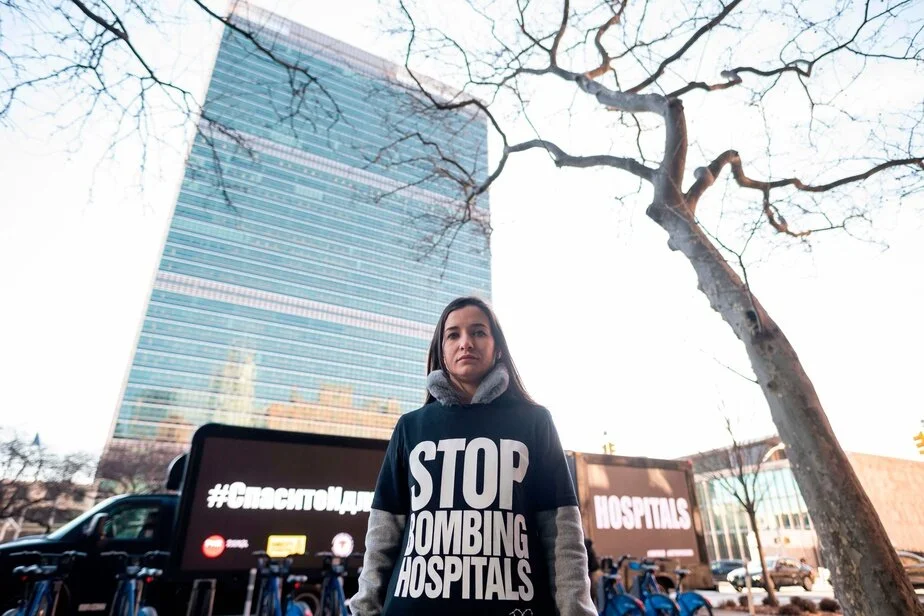
Waad al-Kateab Delivers STOP BOMBING HOSPITALS message at UN
Today, Waad al-Kateab took her STOP BOMBING HOSPITALS message straight to UN HQ in NYC. While touring her Oscar-nominated film ‘For Sama’, Waad joined forces with a coalition of NGOs to deliver a critical message about the international community’s failure to act to stop the killing in Syria.
The scenes captured in ‘For Sama’ in Aleppo are still happening today in Idlib: hospitals are being targeted, entire families killed and hundreds of thousands have been driven from their homes. And the world remains silent.
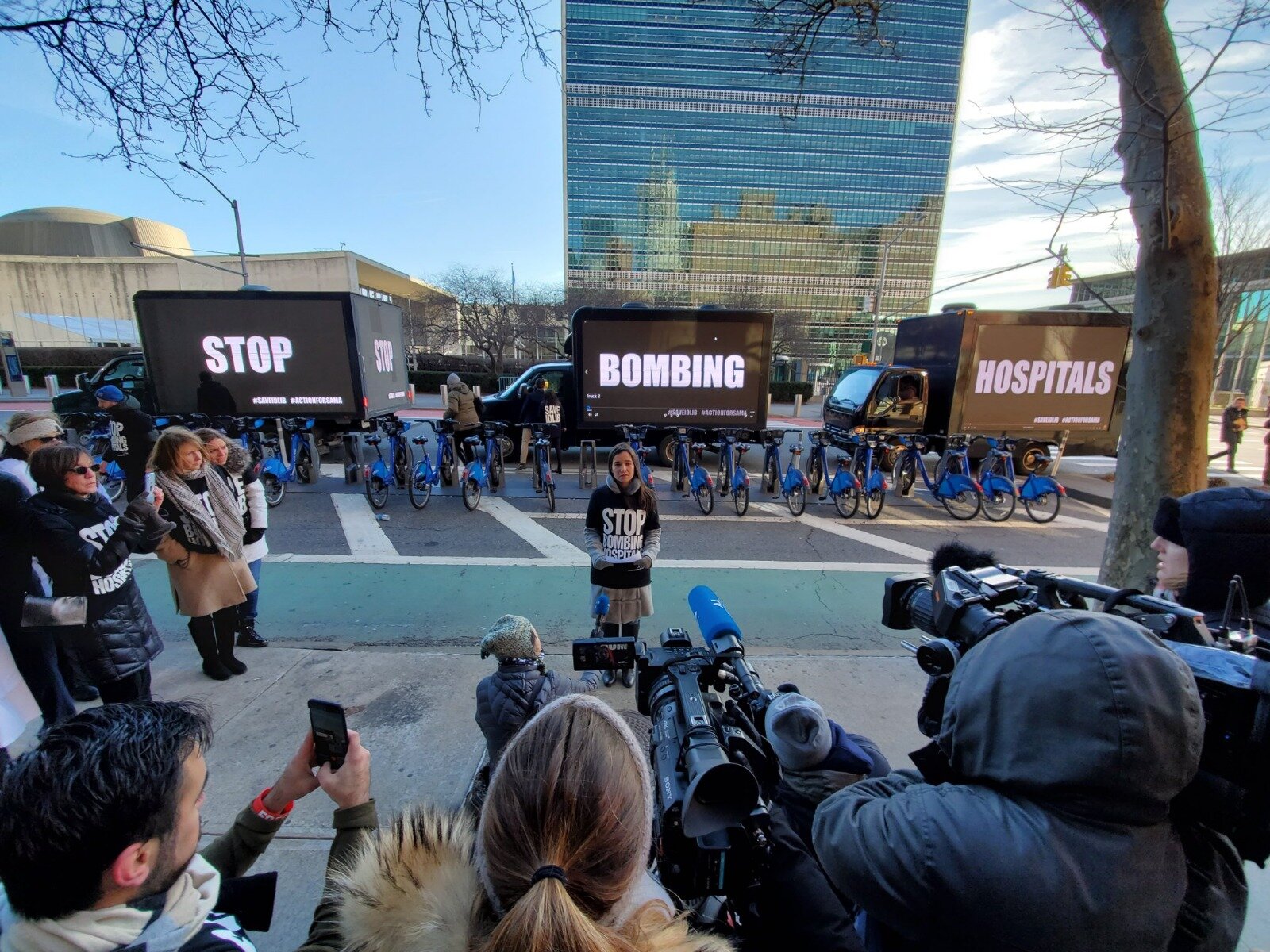


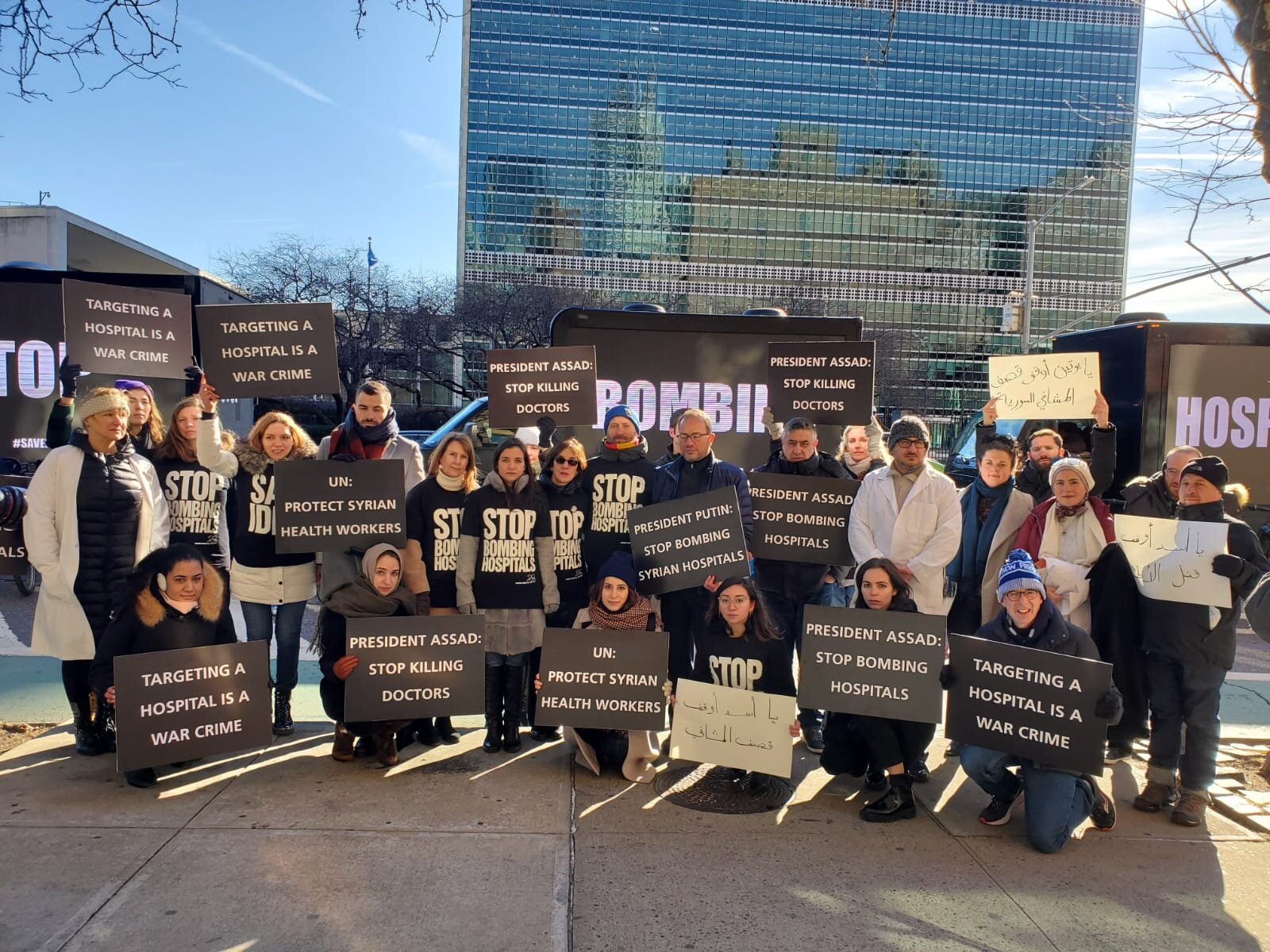

Set against the backdrop of UN HQ, Waad stood in front of billboard trucks “STOP” “BOMBING” “HOSPITALS,” (rotating in English, Russian, and Arabic), to share poignant, powerful messages from doctors on the ground in Syria...
“My brother’s house was targeted and hit directly by three back-to-back airstrikes. He and his wife Salem, injured in the attacks, lost their children: five-year-old Jenna, three-year-old Safaa, and one-and-a-half-year old Mohammed. Salem was in her first trimester when the attack happened and lost her unborn child. First responders worked for two hours to evacuate my brother and his wife from the devastated remains of the house. Both of them had sustained severe injuries all over their bodies. My brother was taken to one of the border hospitals for treatment to his spinal cord.”
““I hope in 2020, when I wake up in the morning and read the news, I don’t read about dismembered children. I hope our children will go back to school and live a normal childhood like any other child.” ”
““Being a medical worker in Syria is extremely challenging. I’ll never forget the day our hospital was targeted twice in one day. That day I was in the hospital. We had to pull ourselves together and keep going to save as many lives as possible.” ”
““When we treat the displaced during one of our response efforts, we have mixed emotions. On the one hand, we are happy to provide medical services to our patients, but at the same time we are saddened by the fact that they were forced to leave their homes.” ”
“ For Sama is not just a film for me. It is my life. I survived for a reason, and through my filmmaking, I was able to give a platform to Syrian civilians being killed silently.” said Waad. “I am here to remind the international community that hospitals are not targets, children should be protected and no-one should have to flee their home.” #stopbombinghospitals #actionforsama

Afraa’s Story: Through For Sama our voice has finally reached people
So many of our colleagues and friends, who were such a big part of our lives, were also a big part of For Sama. We want to share some familiar faces from the film with you: where they are now, their memories of Aleppo and what they hope For Sama can share to the world about Syria.
Here’s Afraa’s story...

My name is Afraa, I’m 38 years old and I live in Gaziantep. I used to work in the education sector before the revolution, and I currently work in the protection of women and children for an NGO.
In Aleppo, I participated in the peaceful movement. After Aleppo went out of the Assad regime’s control, I decided to stay in order to provide any kind of help to the people, in particular the children. I participated in opening a series of schools in Aleppo. I was an education supervisor for a group of schools and I also worked in the field of psychosocial support. I did a lot of other volunteer positions, too, for example organising parties and activities for children like coloring the “Freedom bus” as well as graffiting on walls and establishing a theatre team for children, writing plays and training them how to act on the theatre stage.


I was a part of the family you saw in the film, which represents everything I adore in the world. This family eases my pain and my loss.
For me, the film is our eyes which witnessed all kinds of horror, sorrow, fear, joy, resilience, and optimism we felt in Aleppo. The film is what’s left of the memory of Aleppo, through the film we still remember what our homes and the streets used to look like, and if someday I lose my memory and become sick of Alzheimer's, my children will show me the film so I can watch myself, my family, and all the things I love.
I received a lot of positive messages, and a lot of questions like, “How can you still laugh and smile despite everything you went through?”
The most overwhelming message I received was when someone told me “I can’t stop thinking about you”. Our voice has finally reached people and explained that we’re normal people, we love, we laugh, we sing and colour. We just need a little safety, dignity, freedom, and a small land to shelter us.
My wish for the people who watched the film is that they try to stop the bloodshed in Syria, help prevent another forced displacement from taking place, and support our right to a volunteered and safe return, which can’t happen while this regime is still in power.
I also want people to know that people of Idlib are now being subjected to the same suffering you saw in the film, I want you to imagine that it might have been me there now, still suffering. Idlib became home to a lot of previously displaced people from all around Syria, and it would be an outrageous crime if they were to be forcibly displaced again.

Salem’s Story: Someday we'll return to build our country again, with love
So many of our colleagues and friends, who were such a big part of our lives, were also a big part of For Sama. We want to share some familiar faces from the film with you: where they are now, their memories of Aleppo and what they hope For Sama can share to the world about Syria.
Here is Salem’s story.

Hello, I am Salem and I live in Gaziantep, Turkey.
The point of the revolution for me is to love all people, to ease their pain, to try to fight oppression and to build a better future for us and for our children. It is also to show the difference between Assad’s rule with all the horror, fear, injustice, and between the revolution’s principles and putting the neglected community in charge of their responsibilities.
I participated in the peaceful demonstrations in Aleppo in 2011 and I started working in the civil society around the middle of 2012. It was then that we started cleaning our city when the regime withdrew all kinds of civil services from the city. I participated in founding the local community council of Aleppo city. I worked in education and relief, and I put my previous work expertise in the civil registry to work by creating a similar system in Aleppo and its suburbs, to provide people with identification papers and such. I participated in all kinds of civil activities to support the people’s resistance, together with my lifetime companion, my wife Afraa. We shared joy and sadness with our children, with our friends Hamzah, Waad, Abd Al-Fattah, Milad, Mahmoud, and Abdoullah.


One time in Aleppo, when we had invited our friends over for dinner, a warplane dropped an exploding barrel right on the building directly adjacent to ours. The building turned to ruins and our house was partially damaged - the windows and doors got moved, a hole cracked through the wall. My wife came home horrified until she realized that it wasn’t our house that blew up. She was determined not to let fear control the atmosphere, so we cleaned up the debris and the dirt, we cooked the meal and then our friends showed up and it was a nice night.
There is another moment that represents how we used to create happiness with our own hands during the siege and all the shelling, barrel bombs, missiles, and horror everywhere. Our friends, along with my wife and children, all gathered together in secret. They called me and told me to come hang out, so I knocked on the door and entered the room, then all of the sudden they turned all the lights off and everyone came into the room holding a cake, singing “Happy birthday to you”. I almost cried. This was the first time ever that I’d been thrown a surprise birthday party, especially the cake, which because of the siege, Waad had even managed to make without eggs.
For Sama is our message to the world to not to give up its responsibilities. The film captured an important part of our emotional swings such as between hope and desperation; between courage and fear. We laughed when we were supposed to cry, sometimes it was the other way around, but no matter what, we always loved our country, we loved its people, and we held onto it as much as we could. We still believe that someday we’ll thrive and we’ll return to build our country again with love, and only with love.
More than 20 killed in air raids on Idlib by the regime
At least 21 people have been killed in Syria's rebel-held Idlib province as Syrian government forces and their Russian allies intensified an air offensive on the country's northwest, according to rescue workers who operate in opposition-held areas.
The Syrian Civil Defence, also known as the White Helmets, said air raids and barrel bombs on Wednesday struck a vegetable market in the town of Ariha, as well as repair workshops in an industrial area, a few hundred metres away from the market.
At least 19 people were killed in the attacks on the market and the nearby shops, including a Civil Defence volunteer, Ahmed Sheikho, a spokesman for the group, told Al Jazeera.
A man was also killed in the village of Has as a result of a Syrian government air raid, Sheikho said, while a young girl succumbed to wounds sustained in a previous attack, which took place before the latest ceasefire was implemented.
The least 82 people were wounded in the attacks on Wednesday and the death toll is likely to increase, according to the White Helmets.
21 innocent people have lost their lives today, and 82 others have been injured, as a result of the regime/Russian terrorist attacks on #Idlib and #Ariha market and many other places in northern #syria. The number of dead will climb as many are critically injured. pic.twitter.com/OSbgkynMz2
— The White Helmets (@SyriaCivilDef) January 15, 2020
The bombardment engulfed several vehicles in the industrial zone, leaving the charred corpses of motorists trapped inside, an AFP news agency correspondent said.
Mustafa, who runs a repair shop in the area, told AFP he returned to find the shop destroyed and his four employees trapped under the rubble. It was not immediately clear if they had survived.
"This is not the neighborhood I left two minutes ago," Mustafa said.
![People inspect destruction caused by government air raids in the town of Ariha, Idlib province [Ghaith Alsayed/AP Photo]](https://images.squarespace-cdn.com/content/v1/5dd2b54227235964a45338d6/1579185824342-YEJSDTGGFZW3WC2S75QE/8daba5d7b8ee49579d97645dcb1c1188_18.jpg)
People inspect destruction caused by government air raids in the town of Ariha, Idlib province [Ghaith Alsayed/AP Photo]
The attacks come days after a brief lull. The ceasefire brokered by Moscow, which supports the Syrian government, and Turkey, which backs the rebels, faltered on Tuesday night when air raids hit a string of towns in the southern part of Idlib province.
Since December 1, around 350,000 people, mostly women and children, have been displaced by the renewed offensive, the United Nations said on Thursday.
Sara Kayyali, a Syria researcher for Human Rights Watch, said nearly four million civilians are "essentially trapped" in Idlib due to the relentless bombardment.
"It's likely that many of these attacks on protected civilian infrastructure, where there is large civilian presence and no real military target, are likely to be war crimes," Kayyali told Al Jazeera.
The northwestern region is home to nearly three million people, about half of whom were transferred there in large groups from other parts of the country which had been held by rebels and were retaken by pro-government forces.

For Sama Nominated for Best Documentary Feature at the Oscars
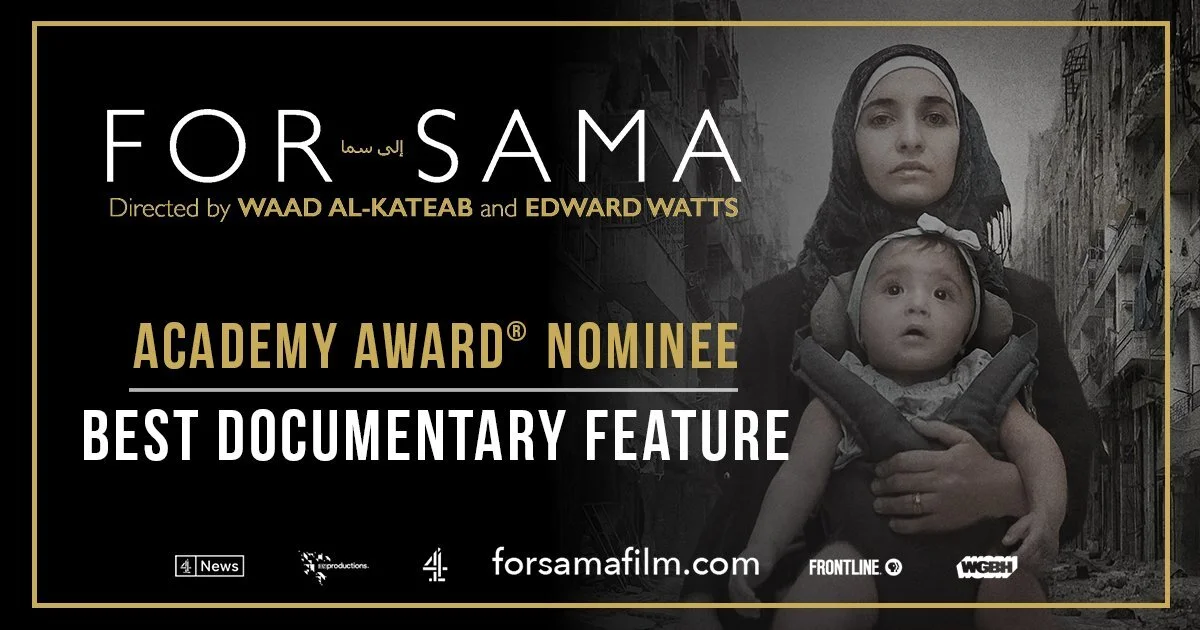
We are thrilled to announce that For Sama has been nominated for Best Documentary Feature at the Oscars! This nomination provides an even larger platform for us to be able to discuss the aims of the Action For Sama campaign with millions of people around the world.
We wish to congratulate the filmmaking team and their partners at Channel 4 News, ITN Productions, Republic Film Distribution & Frontline PBS. This recognition is so incredibly well deserved.
Watch the team celebrating when the news came in:
The second when the great news came:
— Waad Al-Kateab (@waadalkateab) January 13, 2020
For Sama made it to#Oscar2020
Thanks for everyone who opend his life to me and my Camera and also thanks for everyone who helped us and gave us lots of love though this long journey from Aleppo 2011 to the great team here today.@forsamafilm pic.twitter.com/b6kLExYNTy
For Sama was made to share the truth about what's happening in Syria and Action For Sama was launched to help spread the word even further.
Please support the heroic efforts of the humanitarians and medics still saving lives and donate to our partners at Help Refugees.
The United Nations is investigating the criminal targeting of hospitals and medical facilities in Syria. Join us and Physicians for Human Rights in telling the UN Secretary-General to make the findings public and name the perpetrators. Sign the petition here.
Thank you, as ever, for your support.
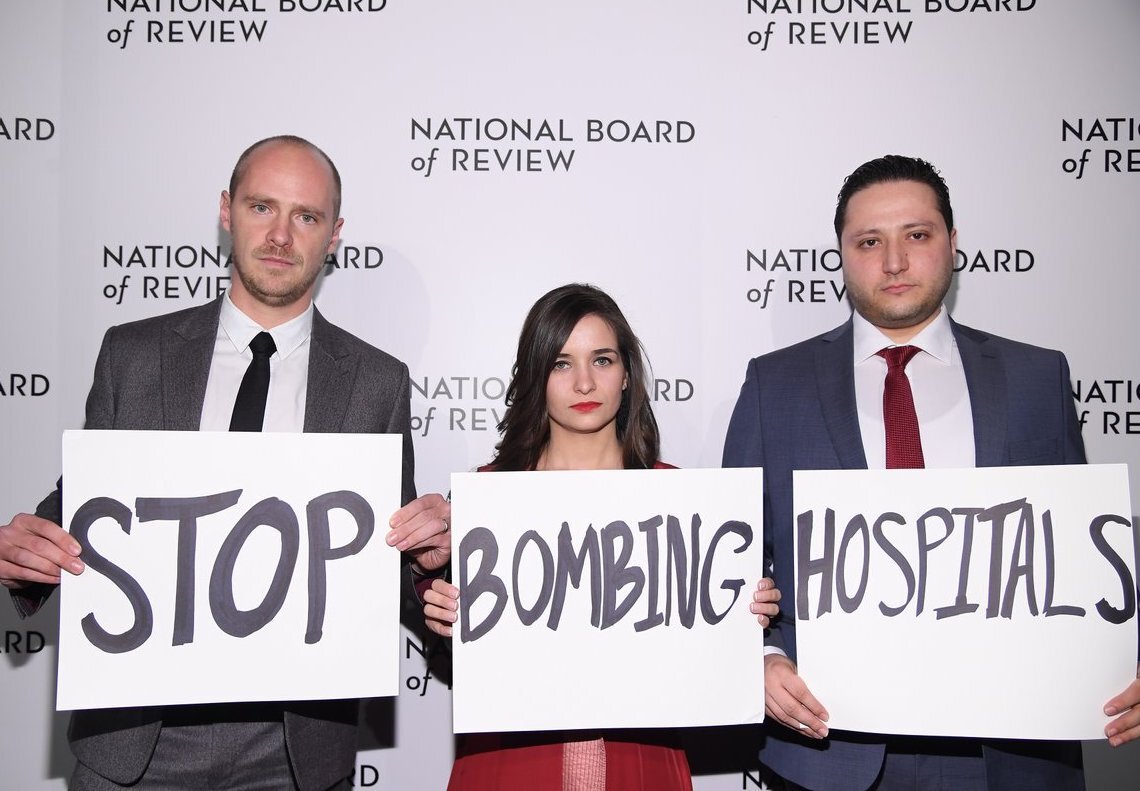
UN BOARD OF INQUIRY ON THE BOMBING OF HOSPITALS IN SYRIA IS FAILING OUR PEOPLE
By Waad al-Kateab
Attacks on Syria - my home - continued over Christmas. Civilians are being killed, families are being broken apart, homes are being destroyed. We see no end to these horrific attacks but we try everything to make them stop. We stand with our people in Syria, we raise our voices for them. We urge people to take notice of what is happening and we demand that the war criminals responsible are held accountable.
But the UN doesn’t hear us. The UN ignores us.
We’ve heard about the UN’s Board of Inquiry to investigate attacks on health care facilities in Syria. At first, we were so relieved and happy to hear that an investigation into targeted Russian and Syrian regime bombings of UN-sponsored facilities, including over 50 medical facilities in the past 9 months, would finally lead to serious accountability. But our hopes crashed when we learned that they are only looking into 7 of the attacks. Only one of these is suspected to be a Russian attack. We also feel frustrated that the final report may not be made public. This inquiry is not accurate. These results will not represent the reality of what is happening. I’ve seen it with my own eyes and it has been proven by the New York Times. If there is evidence of what is going on in Syria then why are the UN ignoring this? This is not justice for us.
By keeping the results secret and by not even trying to show who is to blame for these attacks on hospitals, the UN is failing Syrians and failing its role as an international organisation. It is also totally unacceptable that Russia is trying to hide the findings of the enquiry and that the UN is weak enough to let this happen. We need all of the facts. We need to uncover and condemn the war criminals once and for all.
My heart breaks for Syria and my people but right now we have to turn our despair, anger and tears into power. We must put pressure on the UN. I demand that Secretary General António Guterres shares what the Board of Inquiry has found with the public. I demand that the UN does not give in to pressure from Russia and the Syrian Regime to discredit the investigation. I demand that the UN does not help them to escape accountability for the horrors they are committing in Syria.
Please help us take action.
Our friends at Physicians for Human Rights have launched a petition to demand the findings are made public and the perpetrators named.
You can also share my message as much as possible. Tag the UN and Secretary General António Guterres to make him take notice.
Twitter: @antonioguterres @UN
Facebook: /unitednations
Instagram: @antonioguterres @unitednations
We will not be silenced and we will not be ignored.
Waad al-Kateab
…
Read this critical article by the New York Times on the UN Board of Inquiry and what really happened in Syria.
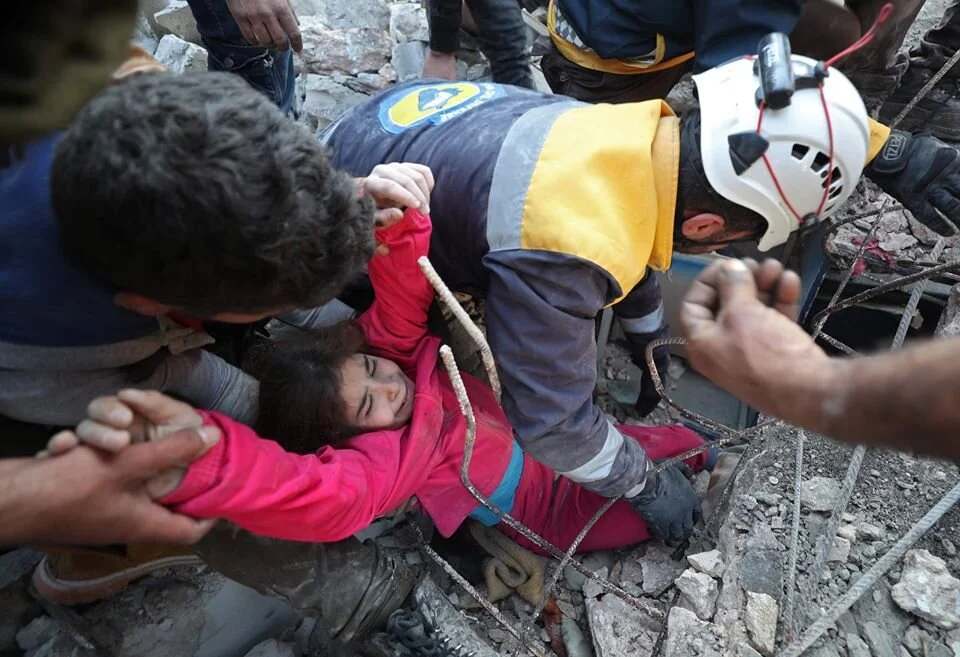
Idlib under fire
Three years ago yesterday we woke up to the news that the final bus of evacuees was leaving Aleppo. The last doctor, Dr Hamza and his wife Waad Al Kateeb and their baby along with other aid workers who had hung on to the end would be transferred to the north of Syria. It felt like a small victory. But of the bitterest sort -- revolutionary heroes who had saved countless lives were being forcibly displaced from their bombed out homes. At least they were alive.
In the months leading up to this, through the brutal siege of Aleppo, every waking minute was filled with scrambling to get grainy videos of doctors and rescue workers pleading for any intervention to save lives. Days of endless pitching to the BBC, CNN, The Guardian -- anywhere that would tell the world what was happening.
The belief, or 'theory of change' as donors would call it was always roughly the same:if the world knew what was happening it would be moved to stop it. That all the promises of never again, all the declaration of rights and UN resolutions meant something -- that we stand together to defend people from state aggression. For me this belief died in Aleppo.
Syrians have told their stories in Oscar winning films, at UN conferences, on the front-pages of every newspaper and in best-selling books. Myself and so many better and greater people spent years doing all we could to support Syrians telling stories of what was happening. Over time it involved endless concessions to what we were told the world needed to see: more children, more heroes, more human stories. Yet as a young Muslim-British poet said recently "if you need me to prove my humanity it is not I that is not human."
Three years later, we are seeing the same Russian and Syrian jets that destroyed Aleppo rain down terror in Idlib. 25,000 have been forced to flee their homes in the last few days, some in trucks, some on foot, all are being targeted as they flee. I don't know what happens next. Those fleeing are heading towards an increasingly over-crowded area of Idlib with scant aid, shelter and no protection from attacks. It is hell on earth.
While the social accounts of Syrian groups have been filled with urgent pleas the world seems to be paying little attention. I saw a Facebook post this week of a conversation between a Syrian and a journalist, I don't know it's origin, if it is real, I don't think it matters.
The journalist: what’s new?
Killing of innocent civilians, displacement, indiscriminate attacks, targeting rescue workers, hospitals, markets
The journalist: what’s new?
The UN is silent, the world is careless
The journalist: what’s new?
We won’t give up calling for justice
The Journalist: I wish I can help
Thanks, will call you again when death toll reaches 500 in one day
Governments have been tweeting calls for action from the 'international community'. Seemingly oblivious to the fact they are the ones that can act. The best hacked metaphor I think of is a group of firefighters standing at a blaze saying to each other: 'someone should put this out'. Oh Syria, you deserve so much better than this.
The legal concept of protection of civilians from states is less than 100 years old. I don't believe we can let it die in Syria. I hope that as old orders collapse we can build better ones. Institutions that can protect the very people they should.
------
Two days after the last bus drove out of Aleppo on Christmas morning I went to a Quaker meeting as my Mum is a member. In Quaker meetings there is no Minister, rather friends (as they call themselves) can minister to each other by sharing thoughts when they feel moved. After about half an hour of a silent meeting I found myself sharing the story of Dr Hamza and Waad and their baby. At that time I only knew them as people in videos but I needed to tell their stories.
After that meeting I learnt that a core component of the Quaker faith in action is the idea of bearing witness to injustice is a way of practicing their faith and a direct expression of it. Whether or not you can change the outcome it is important to witness it, to stand in solidarity. I am not a Quaker but I believe in this, in the simple solidarity of bearing witness.
I don't know how to best support Syrians as an ally anymore. I don't how many more photos the world needs to see of kids being bombed to act.
I deeply believe that in Syria we have seen the collapse of the world we knew, or thought we did in ways we don't even understand yet. I am so sorry for the cost of this failure to every Syrian.
So for now, we do all we can to bear witness to what is happening in Idlib - to raise our voices, share the stories and never ever turn away. And we do what we can to build a world fit for humans.